
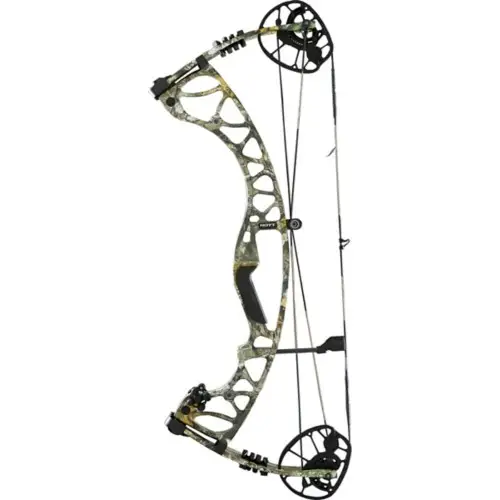
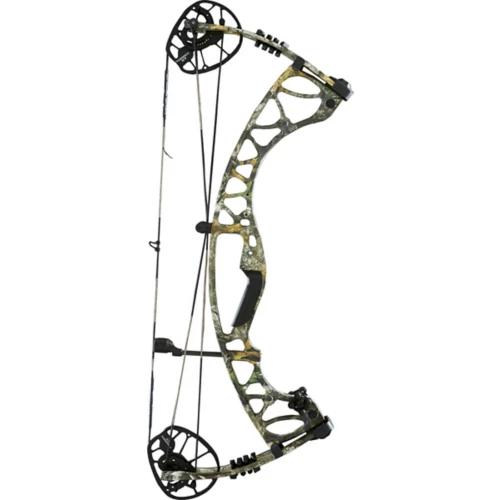
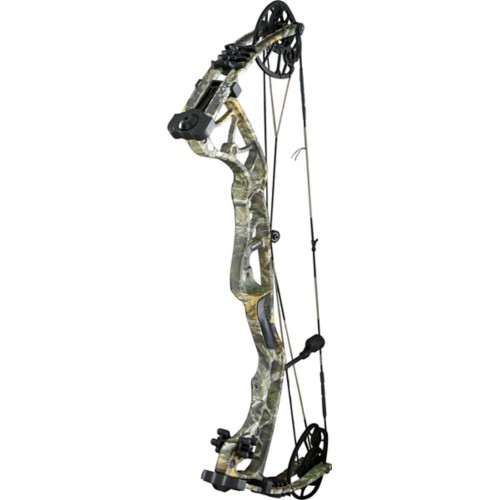
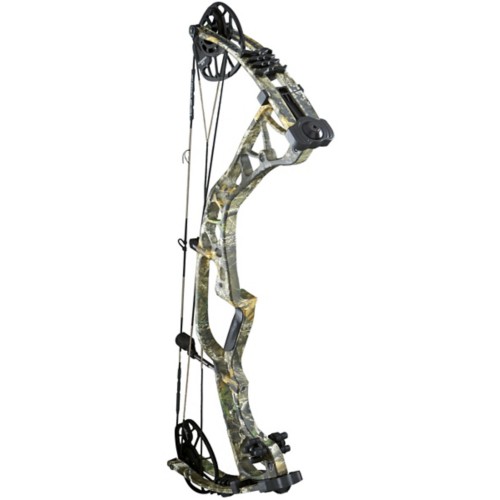

Hoyt Torrex XT

Original price was: $700.00.$580.00Current price is: $580.00.
Specifications
| Feature | Detail |
|---|---|
| Model | Hoyt Torrex XT |
| Axle-to-Axle | 30 ¾” |
| Brace Height | 7” |
| Draw Weight Options | 40–70 lbs |
| Draw Length Range | 26” to 30” |
| IBO Speed | Up to 327 FPS |
| Weight | 3.8 lbs |
| Cam System | Cam & 1/2 System |
| Let-Off | 80% |
| Finish Options | Realtree Edge, Black Out, Buckskin, more |
Hoyt Torrex XT Review: Specs, Performance, Field Test & Buying Guide
The Hoyt Torrex XT is a mid-range compound hunting bow that delivers flagship-inspired engineering at an accessible price point.
Featuring a 30-inch axle-to-axle length, 7-inch brace height, 336 FPS IBO speed, and a 4.0-pound Tec-Lite riser, it adds a Roller Guard cable system, factory-installed Shock Pods, and an upgraded string package over the standard Hoyt Torrex.
For beginner and intermediate hunters who want a forgiving, hunt-ready platform without paying flagship pricing, the Torrex XT represents one of the strongest value propositions in the best mid-range hunting compound bow category today—a bow that consistently outperforms what its price point should deliver.
This Hoyt Torrex XT review covers everything a serious buyer needs: verified specifications, real-world shooting performance, direct comparisons against competitors and the standard Torrex, package buying advice, cold-weather performance considerations, and a complete used bow inspection checklist.
Hoyt Torrex XT Review: Quick Summary
What Is the Hoyt Torrex XT and Who Should Buy It?
The Hoyt Torrex XT is a purpose-built mid-range hunting compound bow that prioritizes shooting forgiveness, practical adjustability, and field-ready durability over raw speed or ultralight weight.
Its 7-inch brace height is the most forgiving in its price class. Its rotating module system eliminates the need for a bow press during draw length changes. Its Roller Guard cable system—a component typically reserved for higher-priced platforms—meaningfully reduces torque and cable wear compared to standard cable slide designs.
It is best suited to beginner and intermediate hunters who want a platform that performs reliably from the moment it leaves the shop and continues performing across multiple hunting seasons.
| Category | Detail |
|---|---|
| Best For | Beginner and intermediate hunters, value-conscious buyers |
| Standout Feature | 7-inch brace height with Roller Guard cable system |
| Top Spec | 336 FPS IBO / 4.0 lb mass weight |
| Verdict | Best-in-class forgiveness and value at the mid-range price point |
Best for:
- First-time bowhunters building a reliable hunting setup
- Intermediate hunters upgrading from entry-level equipment
- Whitetail and medium-game hunters on a practical budget
- Archers who want press-free draw length adjustment in the field
Standout features:
- 7-inch brace height—the highest forgiveness margin in its competitive tier
- Roller Guard cable system for reduced torque and improved cable durability
- Factory Shock Pods for measurably reduced hand shock and vibration
- Rotating module system adjustable without a bow press
- Available as a Ready-to-Hunt package with factory-matched Fuse accessories
Verdict: The Torrex XT does not attempt to compete with flagship bows on speed or exotic materials. It competes on reliability, practical forgiveness, and total ownership value—and it wins that competition convincingly at its price point.
Who Should Buy the Hoyt Torrex XT?
The Hoyt Torrex XT is the right choice if:
- You are a first-time bowhunter who needs a forgiving, accurate platform that does not punish minor form inconsistencies during the learning curve
- You are an intermediate hunter upgrading from budget entry-level equipment and want demonstrably better components without paying $1,200 or more
- You hunt whitetail deer, hogs, or medium game and require reliable kinetic energy delivery at practical hunting distances
- You want to adjust draw length between 26 and 30 inches without scheduling a pro shop appointment for every change
- You are building a first hunting setup and want a coordinated package with matched accessories rather than sourcing components individually
- You prefer a forgiving brace height that protects against form errors rather than a shorter brace height that maximizes speed at the cost of shooting tolerance
Who Should Skip the Hoyt Torrex XT?
The Hoyt Torrex XT is not the optimal choice if:
- Your draw length falls outside the 26–30-inch range—the rotating module system does not extend beyond this window
- You are pursuing large, dangerous, or thick-skinned game where maximum kinetic energy and penetration margins are non-negotiable
- You are an experienced archer who wants access to the advanced tuning features found only on higher-tier Hoyt platforms such as the Carbon RX or VTM series
- Your budget extends to $900 or above, where flagships from Hoyt, Mathews, and Bowtech become accessible and the performance gap widens meaningfully
What Is the Hoyt Torrex XT?
Definition
The Hoyt Torrex XT is a mid-range hunting compound bow manufactured by Hoyt Archery, designed for beginner and intermediate hunters seeking reliable performance, practical adjustability, and shooting forgiveness at a sub-flagship price point.
It features a 30-inch axle-to-axle length, 7-inch brace height, 4.0-pound mass weight, and an IBO speed rating of up to 336 FPS. According to Hoyt Archery, its core technologies include the Tec-Lite aluminum riser, Cam & Half technology, Roller Guard cable system, factory Shock Pods, and a rotating draw length module system adjustable without a bow press.
The Torrex XT sits above the budget entry tier in build quality and component specification, priced below Hoyt’s flagship Carbon and RX platforms, and engineered to deliver the shooting characteristics that matter most to hunters in the field: forgiveness, reliability, and ease of adjustment.
What makes the Hoyt Torrex XT different from the standard Torrex?
The Hoyt Torrex XT improves on the standard Torrex by adding a Roller Guard cable system, Shock Pods for vibration reduction, and upgraded strings and cables. These upgrades create a smoother draw cycle, quieter shot, and longer component life while maintaining the same forgiving 7-inch brace height and press-free draw length adjustment that define the platform.
Introduction: What the Mid-Range Hunting Bow Market Gets Wrong
The mid-range compound bow market is defined by a persistent tension between specification inflation and actual field performance.
Manufacturers routinely optimize mid-range bows around IBO speed ratings and axle-to-axle numbers that look competitive on spec sheets but produce bows that punish the archers who need forgiveness most—hunters still developing consistent form under pressure.
The result is a category full of bows that look good on paper and underperform in the field. This gap is most visible during the high-stress moments that define bowhunting: cold mornings in elevated stands, awkward shooting angles, partial draws caused by heavy clothing, and rushed shots at moving animals.
Expert Insight
The most consequential specification for a beginner or intermediate hunter is not IBO speed—it is brace height.
Brace height determines how long the arrow remains on the string during the power stroke, which directly controls how much a form error influences arrow flight. A bow with a 7-inch brace height is measurably more tolerant of grip torque, release inconsistency, and bow arm movement than a 5- or 6-inch brace height bow producing equivalent speed.
For hunters who shoot fewer than 200 arrows per week during the off-season, that forgiveness margin is worth more in the field than any 15 FPS speed advantage on a spec sheet.
Hoyt designed the Torrex XT around this principle. Rather than engineering maximum IBO speed into a platform marketed to beginners, Hoyt prioritized the 7-inch brace height, smooth Cam & Half draw cycle, and Roller Guard cable system that produce consistent, forgiving results under the imperfect conditions real hunters actually face.
That design philosophy is why the Torrex XT consistently earns its position among the best mid-range hunting compound bows available today.
Hoyt Torrex XT Full Specifications
| Specification | Value |
|---|---|
| Manufacturer | Hoyt Archery |
| Axle-to-Axle | 30 inches |
| Brace Height | 7 inches |
| Mass Weight | 4.0 lbs |
| IBO Speed | Up to 336 FPS |
| Draw Length Range | 26–30 inches |
| Draw Weight Options | 40–50 lbs, 50–60 lbs, 60–70 lbs |
| Let-Off | Up to 80% |
| Riser | Tec-Lite Aluminum |
| Cam System | Cam & Half |
| Cable System | Roller Guard |
| Vibration Control | Shock Pods |
| Launch MSRP | ~$599–$649 bare bow |
Source: Hoyt Archery manufacturer specifications.
These specifications communicate a coherent engineering philosophy. The 7-inch brace height and 30-inch axle-to-axle length are deliberate choices that favor hunting stability and shooting forgiveness over maximum speed.
The 336 FPS IBO rating is competitive for the mid-range tier without requiring the aggressive cam timing and short brace heights that make faster bows less forgiving under field conditions. Every number on this spec sheet points toward the same archer: someone who needs a reliable hunting tool that performs consistently, not a bow optimized for chronograph testing.
Core Technologies and Engineering Features
Tec-Lite Aluminum Riser
The Tec-Lite riser is a machined aluminum platform that achieves a 4.0-pound bare bow weight through engineered material removal geometry rather than premium carbon fiber construction.
For mid-range pricing, this represents a meaningful investment in riser quality. The platform maintains sufficient mass for post-shot stability while keeping carry weight manageable across full hunting days on foot.
The riser geometry also contributes to the Torrex XT’s dynamic balance characteristics. A well-balanced riser reduces the tendency to torque during the draw cycle, produces a more neutral recovery after the shot, and reduces shooter fatigue across extended sessions—a detail that accumulates significantly over a full hunting season.
Cam & Half Technology
Hoyt’s Cam & Half system pairs a primary cam with a half-cam idler wheel, producing a draw cycle that is smoother and more consistent than binary cam systems while avoiding the timing drift that affects some single-cam designs under extended use.
For hunting applications, this translates into practical, measurable advantages:
- A progressive, predictable build into peak weight without abrupt stacking
- A firm back wall with a defined valley that supports consistent anchor point location
- Reliable cam timing that requires less frequent maintenance than binary systems
- Consistent let-off delivery that holds up across the full draw weight range
The Cam & Half system also simplifies bow tuning. Because the half-cam tracks the primary cam without requiring independent timing adjustment, paper tuning the Torrex XT is more straightforward than tuning a binary cam system—a practical advantage for hunters who manage their own setup.
Hoyt Torrex XT Brace Height: Why 7 Inches Matters
Direct Answer Block
What is the brace height of the Hoyt Torrex XT, and why does it matter?
The Hoyt Torrex XT has a 7-inch brace height—the distance from the deepest point of the grip to the bowstring at rest.
A longer brace height reduces the arrow’s contact time with the string during the power stroke. This means any form error has less time to influence the arrow before it clears the bow.
At 7 inches, the Torrex XT’s brace height is the highest in its competitive price tier, making it the most forgiving option for hunters who have not yet developed fully consistent form.
This is not a performance compromise. It is a deliberate design priority that serves the Torrex XT’s target audience more effectively than the shorter brace heights found on speed-optimized bows at the same price point.
Roller Guard Cable System
The Roller Guard is a cable containment system that uses a rolling contact mechanism to guide cables rather than a friction-based cable slide. This distinction produces three specific, measurable consequences in real-world use.
Reduced lateral torque: A standard cable slide creates friction and lateral pressure on cables as they track during the draw cycle. The Roller Guard’s rolling contact point eliminates this friction, reducing the torque transferred to the riser and cam during draw and recovery.
Improved cable durability: Friction-based cable slides abrade cable strands over time, accelerating wear and shortening replacement intervals. The Roller Guard’s rolling contact preserves cable integrity over a meaningfully longer service life.
More consistent cam timing: Reduced lateral cable pressure produces more consistent cam timing across the full draw cycle, which directly improves arrow flight consistency and simplifies broadhead tuning.
The Roller Guard is a component more commonly found on Hoyt’s higher-tier platforms. Its inclusion in the Torrex XT at mid-range pricing is one of the two primary reasons—alongside the 7-inch brace height—that this bow competes above its price class.
Hoyt Torrex XT Effective Let-Off
What is the effective let-off of the Hoyt Torrex XT?
The Hoyt Torrex XT delivers up to 80% let-off, meaning an archer drawing 70 pounds at peak weight holds approximately 14 pounds at full draw.
This holding weight is comfortable enough to sustain during extended waits for ethical shot opportunities—a critical practical advantage over bows with lower let-off percentages that fatigue the holding arm during long holds at anchor.
Effective let-off can vary slightly based on draw length and module position. Verify your specific configuration with a draw board at your authorized dealer.
| Peak Draw Weight | Holding Weight at 80% Let-Off |
|---|---|
| 50 lbs | ~10 lbs |
| 60 lbs | ~12 lbs |
| 70 lbs | ~14 lbs |
Shock Pods
Factory-installed Shock Pods are rubber vibration-dampening components integrated into the Torrex XT’s riser at structural locations that address the primary vibration frequencies generated during arrow release.
They reduce post-shot hand shock and vibration by absorbing energy at the riser rather than transmitting it through the grip into the archer’s hand and arm.
The practical outcome extends beyond comfort. Excessive hand shock over time contributes to flinch responses that degrade shooting form—a phenomenon that accumulates gradually and often goes unrecognized until accuracy degrades noticeably. The Shock Pods’ vibration management is a long-term accuracy preservation feature as much as a comfort one.
Rotating Module System and Draw Length Adjustment
Can you adjust the draw length on a Hoyt Torrex XT without a bow press?
Yes. The Torrex XT’s rotating module system allows draw length adjustments between 26 and 30 inches using standard Allen wrenches, without a bow press.
This is a meaningful practical advantage for hunters who need to fine-tune their draw length between sessions or who are calibrating their anchor point during the learning process.
After any draw length change, verify peep sight position, nocking point, and overall tune before hunting use. Peep height shifts predictably with draw length changes and requires re-verification every time the module position is adjusted.
Real-World Shooting Performance
Draw Cycle Feel
The Torrex XT’s draw cycle reflects the Cam & Half system’s design priorities: smooth, predictable, and consistent across its full draw weight range. The build into peak weight is gradual rather than abrupt, which reduces the tendency to rush through the draw—a behavioral pattern that degrades accuracy more than most hunters recognize.
At full draw, the Torrex XT delivers:
- A firm back wall that provides a reliable, repeatable anchor point reference
- Up to 80% let-off producing comfortable holding weight even at 70-pound peak draw
- A valley that is forgiving enough to prevent accidental trigger releases while firm enough to support controlled shot execution
- Stable aiming characteristics with minimal oscillation during the hold
For hunters in tree stands or ground blinds where body positioning is constrained, the Torrex XT’s forgiving valley and consistent back wall translate directly into more ethical shot opportunities—shots that would be compromised or missed on a less forgiving platform.
Noise and Vibration
The combination of factory Shock Pods and the Roller Guard cable system produces a notably quiet, low-vibration shot for a bow at this price point.
Residual hand shock is minimal by mid-range standards, and the shot report is sufficiently low for whitetail hunting at typical stand distances.
Hunters transitioning from entry-level bows without integrated dampening consistently identify the post-shot feel improvement as one of the Torrex XT’s most immediately apparent practical advantages.
Cold-Weather Hunting Performance
Cold-weather hunting introduces performance variables that most bow reviews ignore entirely. The Torrex XT’s characteristics address several of these directly.
Brace height advantage in cold conditions: Heavy base layers and insulated jackets reduce effective draw length by 0.5–1.5 inches and increase bow arm contact with clothing. A forgiving 7-inch brace height reduces the accuracy penalty these variables introduce compared to tighter-brace alternatives.
Draw length adjustment for heavy clothing: The press-free rotating module system allows hunters to reduce draw length by a half-inch or full inch for heavy clothing seasons without a pro shop visit. Fixed-module systems cannot match this field flexibility.
Roller Guard in cold conditions: The rolling contact mechanism maintains consistent cable guidance across a wider temperature range than friction-based slides, which can stiffen when lubricants thicken or frost accumulates at the contact point.
Tree stand maneuverability: The 30-inch axle-to-axle length remains manageable in elevated stand positions where drawing through brush, around tree limbs, or at restricted angles is common.
Hoyt Torrex XT Speed: IBO Rating vs. Real-World Performance
What is the IBO speed of the Hoyt Torrex XT?
The Hoyt Torrex XT carries an IBO speed rating of up to 336 FPS, measured under IBO standardized testing conditions: 70-pound draw weight, 30-inch draw length, and a 350-grain arrow.
Real-world hunting speeds depend on actual draw length, peak draw weight, total arrow weight, and bow tune. Hunters shooting at 28 inches with a 400-grain hunting arrow at 70 pounds should expect velocities in the 280–295 FPS range under well-tuned conditions.
| Draw Length | Draw Weight | Arrow Weight | Estimated FPS | Estimated KE (ft-lbs) |
|---|---|---|---|---|
| 26 inches | 60 lbs | 400 grains | 255–265 | 58–63 |
| 27 inches | 60 lbs | 400 grains | 265–275 | 63–67 |
| 28 inches | 70 lbs | 400 grains | 285–295 | 72–77 |
| 29 inches | 70 lbs | 400 grains | 295–305 | 77–83 |
| 30 inches | 70 lbs | 350 grains | Approaches IBO under optimal conditions | 77–82 |
Kinetic energy calculated using KE = (arrow weight in grains × velocity²) ÷ 450,240. Verify with a calibrated chronograph for your specific setup.
Why real-world speed matters more than IBO ratings: The IBO testing standard uses conditions most hunters never replicate. Understanding actual performance at your specific configuration—not the headline IBO number—determines whether your setup generates sufficient kinetic energy for ethical hunting at your intended distances.
For whitetail deer at distances under 40 yards, the Torrex XT’s real-world performance across its draw weight range is more than adequate with appropriate arrow selection.
Performance at Common Hunting Distances
The following estimates apply to a representative Torrex XT configuration: 28-inch draw, 70-pound peak draw weight, 400-grain arrow, zeroed at 20 yards.
| Distance | Estimated Velocity | Estimated KE | Approximate Drop from 20-Yard Zero |
|---|---|---|---|
| 20 yards | ~290 FPS | ~75 ft-lbs | 0 inches (zero) |
| 30 yards | ~278 FPS | ~69 ft-lbs | ~3–4 inches |
| 40 yards | ~266 FPS | ~63 ft-lbs | ~9–11 inches |
| 50 yards | ~254 FPS | ~57 ft-lbs | ~17–21 inches |
Trajectory estimates are for planning purposes only. Verify through field testing at hunting distances before the season.
For most hunters using the Torrex XT, ethical shot distances of 30–40 yards represent the practical hunting window where kinetic energy, trajectory management, and shooter confidence converge at their strongest point.
Hoyt Torrex XT Draw Weight Adjustment
What draw weight options are available for the Hoyt Torrex XT?
The Hoyt Torrex XT is available in three limb configurations: 40–50 lbs, 50–60 lbs, and 60–70 lbs. Each provides a 10-pound adjustment range via the limb bolt system without limb replacement.
Selecting the correct configuration requires honest assessment of physical capability, target hunting species, and state minimum draw weight regulations. Verify current requirements with your state wildlife agency before finalizing a hunting setup.
| Limb Configuration | Holding Weight at 80% Let-Off | Recommended Application |
|---|---|---|
| 40–50 lbs | ~8–10 lbs | Youth hunters, beginners, small game |
| 50–60 lbs | ~10–12 lbs | Whitetail deer, hogs, most medium game |
| 60–70 lbs | ~12–14 lbs | Elk, black bear, large game hunting |
On draw weight selection for hunting: Many hunters default to the 60–70-pound configuration assuming maximum draw weight produces maximum results. In practice, a hunter who consistently shoots a 60-pound setup with proper arrow selection will achieve better terminal results than one struggling to draw 70 pounds smoothly under field pressure. Choose the configuration that supports consistent, controlled shooting—not the heaviest available limb option.
Hoyt Torrex XT vs. Hoyt Torrex: What’s Actually Different?
Direct Answer Block
What is the difference between the Hoyt Torrex and Hoyt Torrex XT?
The Hoyt Torrex XT upgrades the standard Torrex in three specific areas: it replaces the standard cable slide with a Roller Guard system, installs factory Shock Pods for vibration reduction, and incorporates an improved string and cable package.
These are not cosmetic differences. The Roller Guard reduces cable torque and wear. The Shock Pods measurably reduce hand shock. The upgraded strings deliver more consistent performance over a longer service interval.
For roughly a $100 premium over the base Torrex, the XT provides smoother drawing, reduced vibration, and improved long-term durability that justify the price difference for any serious hunter planning multi-season use.
| Feature | Torrex XT | Standard Torrex |
|---|---|---|
| Cable System | Roller Guard | Standard cable slide |
| Vibration Control | Factory Shock Pods | Not standard |
| String Package | Upgraded | Standard |
| Draw Cycle | Smoother | Good |
| Long-Term Durability | Higher | Standard |
| Price | ~$100 more | Lower |
The standard Torrex remains a capable hunting bow for strictly budget-constrained buyers. The XT is the correct choice for hunters who intend to use their bow for more than one season.
Hoyt Torrex XT Package: Ready-to-Hunt Value Analysis
Should you buy the Hoyt Torrex XT Ready-to-Hunt package?
The Hoyt Torrex XT Ready-to-Hunt package includes factory-mounted Fuse accessories—typically a sight, arrow rest, quiver, stabilizer, and wrist sling—coordinated and installed at the factory.
For first-time hunters who need a complete, functional setup without the complexity of individual component selection, the RTH package delivers genuine value. The accessories are matched to the bow’s specifications, the setup is functional immediately, and the bundled price is lower than purchasing equivalent components separately.
Experienced hunters with established accessory preferences will benefit more from the bare bow option.
What accessories come with the Hoyt Torrex XT Ready-to-Hunt package?
According to Hoyt Archery, the RTH package typically includes a Fuse Carbon Blade sight, Hostage XL arrow rest, 5-arrow quiver, stabilizer, and wrist sling. Specific contents may vary by retailer and model year; verify with your authorized Hoyt dealer before purchasing.
How much does a Hoyt Torrex XT weigh with accessories?
The bare Torrex XT weighs 4.0 pounds. A fully rigged hunting configuration with sight, rest, quiver, and stabilizer typically produces a total system weight in the 5.5–6.5-pound range depending on component selection.
RTH package best for:
- First-time bowhunters who need a complete, functional setup immediately
- Hunters who want to avoid individual component selection complexity
- Budget-conscious buyers where the package price represents meaningful savings
Bare bow best for:
- Hunters with established accessory preferences or existing equipment
- Experienced archers who want control over every component specification
- Hunters who plan to upgrade specific components quickly after purchase
Is the Hoyt Torrex XT Worth the Upgrade?
Yes. For roughly a $100 premium over the base Torrex, the XT adds a Roller Guard cable system, factory Shock Pods, and upgraded strings and cables.
These components provide a smoother draw cycle, meaningfully reduced vibration, quieter shot signature, and longer component service life. For hunters who plan to use their bow for two or more seasons, the XT’s upgraded components reduce long-term maintenance costs while delivering a consistently better shooting experience from the first shot.
The upgrade justifies itself quickly for any serious hunter.
Hoyt Torrex XT vs. Competitors
Hoyt Torrex XT vs. PSE Stinger ATK
Both bows target the beginner and intermediate hunter market at similar price points, but they represent different engineering priorities.
| Feature | Hoyt Torrex XT | PSE Stinger ATK |
|---|---|---|
| Brace Height | 7 inches | 7 inches |
| ATA Length | 30 inches | 30.5 inches |
| IBO Speed | 336 FPS | Up to 320 FPS |
| Mass Weight | 4.0 lbs | 3.9 lbs |
| Cable System | Roller Guard | Standard slide |
| Vibration Control | Factory Shock Pods | Standard |
The Torrex XT’s Roller Guard is the most meaningful differentiator at this comparison. The PSE Stinger ATK is a capable mid-range bow with comparable forgiveness, but the Torrex XT’s upgraded cable system and factory dampening provide a component quality advantage that compounds over multiple seasons of use.
Hoyt Torrex XT vs. Bear Archery Species EV
| Feature | Hoyt Torrex XT | Bear Archery Species EV |
|---|---|---|
| Brace Height | 7 inches | 6.5 inches |
| ATA Length | 30 inches | 31 inches |
| IBO Speed | 336 FPS | Up to 340 FPS |
| Mass Weight | 4.0 lbs | 3.9 lbs |
| Cable System | Roller Guard | Standard |
| Vibration Control | Factory Shock Pods | Standard |
The Bear Species EV’s slightly shorter brace height produces marginally higher IBO speed. The Torrex XT’s 7-inch brace height and Roller Guard deliver a more forgiving shooting experience and superior cable management.
For hunters prioritizing forgiveness and component quality, the Torrex XT is the stronger choice. For hunters who want maximum speed at mid-range pricing and have sufficient shooting volume to manage a tighter brace height, the Species EV warrants consideration.
Hoyt Torrex XT vs. Bowtech Amplify
| Feature | Hoyt Torrex XT | Bowtech Amplify |
|---|---|---|
| Brace Height | 7 inches | 7 inches |
| ATA Length | 30 inches | 28 inches |
| IBO Speed | 336 FPS | Up to 343 FPS |
| Mass Weight | 4.0 lbs | 3.6 lbs |
| Cam System | Cam & Half | Binary |
The Bowtech Amplify’s binary cam system produces slightly higher peak speeds and a lighter mass weight. Binary cam systems can deliver a speed advantage but require more precise timing maintenance to sustain broadhead accuracy over a hunting season.
The Torrex XT’s Cam & Half system is simpler to tune and maintain—a meaningful advantage for hunters who manage their own setup. Shooting both bows at your actual draw length before purchasing is the only reliable method for determining which draw cycle better suits your individual shooting preferences.
Hoyt Torrex XT vs. Mission Switch and Diamond Edge 320
The Mission Switch and Diamond Edge 320 both offer wider draw length and draw weight adjustment ranges, making them stronger choices for growing youth archers or households where multiple shooters share equipment.
Where the Torrex XT holds its competitive position: component quality. The Roller Guard and factory Shock Pods represent a specification level that neither the Mission Switch nor the Diamond Edge 320 matches at comparable pricing.
For hunters who want the best-built bow in the mid-range tier rather than the most adjustable one, the Torrex XT is the stronger long-term investment.
Hoyt Torrex XT: Frequently Compared Alternatives Under $900
| Bow | Price Range | Brace Height | IBO Speed | Key Advantage |
|---|---|---|---|---|
| Hoyt Torrex XT | $599–$649 | 7 inches | 336 FPS | Roller Guard, Shock Pods |
| PSE Stinger ATK | $499–$549 | 7 inches | 320 FPS | Lower price |
| Bear Species EV | $549–$599 | 6.5 inches | 340 FPS | Slightly faster |
| Bowtech Amplify | $699–$749 | 7 inches | 343 FPS | Speed, lighter weight |
| Mission Switch | $499–$549 | 7 inches | 310 FPS | Widest adjustment range |
| Diamond Edge 320 | $449–$499 | 7 inches | 320 FPS | Broadest adjustability, entry price |
Arrow Selection and Tuning Guide
Choosing the Correct Arrow Spine
Arrow spine selection is one of the most consequential and most frequently mismanaged aspects of mid-range bow setup.
Underspined arrows produce erratic broadhead flight that paper tuning alone cannot fully correct, because the problem is dynamic—the arrow is flexing incorrectly through the power stroke, not simply arriving at the target misaligned.
Recommended hunting arrow configurations by draw setup:
| Draw Length | Draw Weight | Arrow Weight | Recommended Spine | FOC Target | Application |
|---|---|---|---|---|---|
| 26–27 inches | 50–60 lbs | 380–400 grains | .400 | 10–15% | Whitetail, hogs |
| 27–28 inches | 60–70 lbs | 400–420 grains | .350 | 10–15% | Whitetail, medium game |
| 28–29 inches | 70 lbs | 400–430 grains | .300–.350 | 12–15% | Elk, large game |
| 29–30 inches | 70 lbs | 420–450 grains | .300 | 12–15% | Elk, black bear |
Verify with arrow manufacturer’s spine selection chart using actual draw weight and arrow length. Confirm with paper tuning and broadhead flight testing before hunting season.
On FOC for hunting applications: Front-of-center percentage directly influences penetration on large-bodied game. A FOC of 10–15% is the well-established target for most hunting arrows. Higher FOC values are appropriate for large or thick-skinned game where penetration depth is the primary concern. Understanding FOC and its effect on terminal performance is recommended reading before finalizing any big-game arrow build.
General spine selection principles:
- Use the arrow manufacturer’s published spine chart with actual peak draw weight and measured arrow length—not draw length
- Err toward a stiffer spine rather than weaker for hunting applications
- Verify final tune through paper tuning before broadhead flight testing
- Confirm broadhead grouping at actual hunting distances with your specific hunting broadhead
Paper Tuning the Torrex XT
The Cam & Half system and Roller Guard cable containment make the Torrex XT one of the more straightforward mid-range bows to paper tune.
Paper tuning identifies tear patterns that indicate specific correction adjustments:
- Nock high tear: Rest position too high, or nocking point too low
- Nock low tear: Rest position too low, or nocking point too high
- Nock right tear (right-handed archer): Rest too far left, or cam timing issue
- Nock left tear: Rest too far right
The Roller Guard’s reduced lateral torque means that cam timing corrections frequently required on cable-slide bows are often unnecessary on the Torrex XT—a practical tuning advantage that reduces setup time.
After paper tuning, verify vane clearance by applying powder or lipstick to the arrow shaft and confirming no contact through the rest and riser window before moving to broadhead flight testing.
Common Setup Mistakes to Avoid
Selecting the wrong limb configuration: The 60–70-pound option is not the automatic choice for all hunters. Many whitetail hunters achieve fully ethical results with 50–60-pound setups while shooting more consistently due to lower peak draw weight demands. Choose the configuration that supports controlled, repeatable execution.
Skipping broadhead flight verification: Field tip accuracy does not guarantee broadhead accuracy—particularly with fixed-blade designs that expose tuning inconsistencies that field tips mask. Always verify broadhead grouping at hunting distances with your specific hunting broadhead before the season opens.
Neglecting peep sight position after draw length changes: Any module adjustment changes anchor point geometry and peep alignment. Verify peep position and sight picture every time draw length is adjusted.
Underweighting hunting arrows: Arrow weight below 5 grains per pound of peak draw weight reduces momentum, increases wind drift sensitivity, and delivers lower kinetic energy retention downrange. For a 70-pound Torrex XT, minimum hunting arrow weight should be 350 grains, with 400+ grains preferred for big game.
Using the RTH package sight beyond its intended range: The Fuse sight included in RTH packages is calibrated for standard hunting distances. Hunters who consistently shoot beyond 40 yards will benefit from upgrading to a quality micro-adjust sight before expecting consistent accuracy at extended range.
Long-Term Durability and Maintenance Schedule
The Torrex XT’s Roller Guard cable system and upgraded string package provide a meaningful durability advantage over standard mid-range bows, but all compound bows require consistent maintenance to perform reliably across multiple hunting seasons.
String and cable replacement: Strings and cables should be inspected every 300–500 shots and replaced every 2–3 years under normal hunting volumes. Serving separation at the peep sight or nocking point is the most reliable early indicator that replacement is approaching.
The Roller Guard’s reduced cable abrasion extends the service interval compared to standard cable slide designs, but does not eliminate replacement as a maintenance requirement. Understanding bow string service intervals before the hunting season prevents field failures from deferred maintenance.
Roller Guard maintenance: The roller should spin freely without grinding or lateral play. Inspect at the beginning of each season and after any significant impact. A roller that does not spin freely is replicating the friction disadvantages of a cable slide and should be serviced or replaced.
Limb inspection: Visually inspect limbs before every hunting season for cracks, delamination, or stress fractures—particularly at limb tips and along the limb face near the limb pocket. Any structural abnormality warrants professional inspection before further use.
Suggested maintenance schedule:
| Interval | Action |
|---|---|
| Before each hunt | Inspect string serving, peep alignment, and arrow rest contact |
| Every 300–500 shots | Full string and cable inspection; wax strings; verify Roller Guard rotation |
| Annually | Complete bow inspection: limbs, cams, axles, modules, Roller Guard |
| Every 2–3 years | Professional restring with matched replacement strings and cables |
| After any impact | Full inspection before further use |
Resale Value Analysis
For hunters evaluating total cost of ownership rather than purchase price alone, resale value is a meaningful variable.
The Torrex XT holds value reasonably well within the mid-range tier, primarily because Hoyt’s brand recognition and documented component quality create consistent secondary market demand.
| Bow | Estimated Resale Retention | Notes |
|---|---|---|
| Hoyt Torrex XT | 50–60% | Hoyt brand demand, Roller Guard reputation |
| Bowtech Amplify | 50–60% | Strong brand, consistent secondary demand |
| PSE Stinger ATK | 40–50% | Good retention, larger used supply |
| Mission Switch | 35–45% | Wide supply, mid-market pricing |
| Diamond Edge 320 | 30–40% | Entry pricing, lower retention |
Market estimates based on observed secondary market patterns. Actual resale value depends on condition, accessories, model year, and local market demand.
For hunters who upgrade on a regular cycle, the Torrex XT’s resale retention effectively reduces its real cost of ownership relative to mid-market alternatives that depreciate more quickly. Monitoring ArcheryTalk Classifieds provides the most current view of actual secondary market pricing for any specific configuration.
Hoyt Torrex XT Price and Market Value
How much does the Hoyt Torrex XT cost?
The Hoyt Torrex XT typically retails for approximately $599–$649 as a bare bow and $699–$749 as a Ready-to-Hunt package, depending on included accessories and retailer promotions.
Current pricing varies by model year, color, and dealer. Lancaster Archery Supply and authorized Hoyt dealers are the most reliable sources for current inventory and verified pricing.
| Condition | Price Range |
|---|---|
| New bare bow | $599–$649 |
| New RTH package | $699–$749 |
| Used (excellent condition) | $350–$450 |
| Used (good condition) | $250–$350 |
Verify current pricing with authorized dealers. Market values fluctuate with inventory availability and model year.
Used Hoyt Torrex XT for Sale: Complete Buying Checklist
Is a used Hoyt Torrex XT worth buying?
A used Hoyt Torrex XT in verified good condition provides excellent value at $250–$450, representing a significant discount from new pricing with access to the same Roller Guard, Shock Pods, and Cam & Half performance.
The bow’s upgraded component specification means that a well-maintained used example is a genuinely capable hunting platform. A dry-fired or structurally compromised example is not—and dry-fire damage is not always immediately visible on inspection.
Thorough evaluation before purchase is non-negotiable.
Structural integrity:
- Examine limbs for cracks, delamination, or stress fractures at limb tips and along limb faces
- Inspect riser for impact damage or stress marks near limb pockets
- Check axle condition for wear, corrosion, or lateral wobble
- Verify Roller Guard roller spins freely without grinding or lateral play—the critical inspection point unique to XT models
Cam and module condition:
- Verify cam rotation is smooth through simulated full draw cycle
- Inspect module edges for uneven wear suggesting timing issues or hard use
- Confirm modules match the advertised draw length configuration
- Ask directly and specifically whether the bow has ever been dry-fired
String and cable condition:
- Examine string serving for separation or fraying at peep, nocking point, and cable contact points
- Assess cable wear at the Roller Guard contact area
- Budget for professional restring if string replacement cannot be documented
Recommended secondary market platforms: ArcheryTalk Classifieds for the most knowledgeable seller community, eBay’s compound bow category for buyer protection policies on higher-value purchases.
Pros and Cons
Pros
- 7-inch brace height is the highest forgiveness margin in its competitive price tier
- Roller Guard cable system is a component typically reserved for higher-priced platforms
- Factory Shock Pods deliver measurably reduced hand shock and vibration from the first shot
- Rotating module system allows press-free draw length adjustment between 26 and 30 inches
- Cam & Half system produces a smooth, consistent draw cycle that is simpler to tune than binary cam alternatives
- Ready-to-Hunt package delivers genuine value for first-time hunters building a complete setup
- Three draw weight configurations accommodate hunters from beginner through large game applications
- Hoyt brand support with widely available parts, service, and authorized dealer network
Cons
- Draw length range of 26–30 inches excludes shorter-draw archers who require below 26 inches
- RTH package accessories are functional starter components—experienced hunters will likely upgrade sight and rest within one to two seasons
- Mid-range pricing does not access the exotic materials and advanced tuning features of Hoyt’s flagship Carbon RX platforms
- 4.0-pound mass weight is not the lightest option for ultralight backcountry applications
Expert Evaluation and Rating
| Category | Score (out of 10) | Rationale |
|---|---|---|
| Build Quality | 8.8 | Roller Guard and Shock Pods exceed typical mid-range component specification |
| Draw Cycle Comfort | 8.9 | Smooth Cam & Half system with forgiving valley and firm back wall |
| Speed and Efficiency | 8.3 | Competitive for mid-range; 7-inch brace height trades some speed for forgiveness |
| Accuracy Potential | 9.0 | 7-inch brace height and Roller Guard combine to produce consistent arrow flight |
| Value | 9.4 | Component quality and hunting capability significantly exceed price point |
| Overall Rating | 8.9/10 | Best-in-class value in the mid-range hunting bow tier |
What distinguishes the Hoyt Torrex XT from mid-range competitors is not any single specification—it is the combination of a Roller Guard cable system and a 7-inch brace height at a price point where most competitors offer one or neither.
That combination produces a bow that shoots better than its price suggests, ages better than standard mid-range equipment, and performs more reliably under real hunting conditions than faster, less forgiving alternatives in the same tier.
Is the Hoyt Torrex XT Suitable for 3D Archery?
Yes, with appropriate expectations.
The Torrex XT’s smooth draw cycle, forgiving 7-inch brace height, and stable aiming characteristics make it capable for 3D archery and recreational target shooting. Its 30-inch axle-to-axle length is slightly shorter than dedicated target bows, which affects stability at longer distances in formal competition formats.
For casual 3D archery—where shooters move between stations at unknown distances under 50 yards—the Torrex XT’s handling characteristics are a practical asset. Hunters who want to use their bow year-round for both hunting and 3D practice will find it fully adequate for recreational competitive use.
USA Archery’s equipment guidelines provide format-specific parameters worth reviewing before competing formally.
Frequently Asked Questions
What is the difference between the Hoyt Torrex and Hoyt Torrex XT?
The Hoyt Torrex XT adds three specific upgrades over the standard Torrex: a Roller Guard cable system replacing the standard cable slide, factory-installed Shock Pods for vibration reduction, and an upgraded string and cable package. These produce a smoother draw cycle, reduced hand shock, and longer component service life. For hunters planning multi-season use, the XT’s upgrades represent meaningful long-term value for approximately $100 more than the base Torrex.
What is the IBO speed of the Hoyt Torrex XT?
The Hoyt Torrex XT carries an IBO speed rating of up to 336 FPS under standardized IBO testing conditions. At typical hunting draw lengths and with hunting-weight arrows, real-world velocity falls in the 265–305 FPS range depending on draw length, draw weight, and arrow selection. Verify actual performance with a calibrated chronograph.
What are the Hoyt Torrex XT specifications?
The Torrex XT features a 30-inch axle-to-axle length, 7-inch brace height, 4.0-pound bare mass weight, 26–30-inch draw length range via rotating modules, draw weight options of 40–50, 50–60, and 60–70 pounds, up to 80% let-off, and an IBO speed rating of 336 FPS. Source: Hoyt Archery manufacturer specifications.
Can you adjust the draw length on a Hoyt Torrex XT without a bow press?
Yes. The rotating module system allows draw length adjustments from 26 to 30 inches using standard Allen wrenches. No bow press is required for routine module adjustments when following Hoyt’s documented instructions. Verify peep alignment and tune after every draw length change before hunting use.
Is the Hoyt Torrex XT good for beginner bowhunters?
Yes. The 7-inch brace height—the most forgiving in its price tier—combined with the smooth Cam & Half draw cycle and press-free draw length adjustment makes the Torrex XT one of the strongest purpose-designed choices for beginner hunters. Its forgiveness characteristics protect against the form inconsistencies that developing hunters inevitably experience under field conditions.
What draw weight options are available for the Hoyt Torrex XT?
The Torrex XT is offered in 40–50 lb, 50–60 lb, and 60–70 lb limb configurations. Each provides a 10-pound adjustment range via the limb bolt system without limb replacement.
Should you buy the Hoyt Torrex XT Ready-to-Hunt package?
The RTH package provides strong value for first-time hunters who need a complete, functional setup without individual component selection complexity. Experienced hunters with established accessory preferences generally benefit more from the bare bow, which preserves full setup flexibility.
Is a used Hoyt Torrex XT worth buying?
A used Torrex XT in verified good condition provides excellent value at $250–$450, delivering Roller Guard performance and Hoyt build quality at significant discount from new pricing. Thorough inspection of limbs, cams, Roller Guard, strings, cables, and modules is essential. Ask directly about dry-fire history before any used purchase.
What arrows shoot best from the Hoyt Torrex XT?
Carbon hunting arrows in the correct spine for your specific draw weight and arrow length. For whitetail hunting at 60–70 pounds with a 28-inch draw, a .350 spine with 400–420 total grain weight and 10–15% FOC is a well-established starting configuration. Verify with the arrow manufacturer’s spine chart and confirm with paper tuning and broadhead flight testing before the season.
Does the Roller Guard reduce maintenance requirements?
Yes, relative to standard cable slide designs. The rolling contact mechanism reduces cable abrasion, extending cable service life and reducing the frequency of replacement under equivalent shooting volumes. The Roller Guard itself requires annual inspection to verify the roller spins freely—a simpler maintenance task than managing accelerated cable wear from a friction-based slide.
Hoyt Torrex XT Review: Final Verdict
This Hoyt Torrex XT review reaches a clear and defensible conclusion: within the best mid-range hunting compound bow category, the Torrex XT sets the standard for component quality, shooting forgiveness, and total ownership value at its price point.
Its 7-inch brace height is the most forgiving in its competitive tier. Its Roller Guard cable system is a component found on bows costing twice as much. Its factory Shock Pods, upgraded string package, and press-free rotating module system complete a feature set that consistently outperforms what its price point should deliver.
The Torrex XT does not pretend to be a flagship bow. It leads with the engineering choices that matter most to the hunters who will depend on it: forgiveness under pressure, reliability across seasons, and practical adjustability without a pro shop appointment.
For first-time hunters, the Torrex XT is the most defensible choice in its price range—a bow that protects against the learning curve rather than punishing it. For intermediate hunters upgrading from entry-level equipment, it delivers a measurable and immediately apparent improvement in every category that matters in the field. For value-conscious hunters who want proven Hoyt engineering without flagship pricing, it represents exactly what a mid-range bow should be.
Not a compromised flagship. A purpose-built hunting tool designed around the needs of the archer who will count on it when it matters most.
Ready to configure your Torrex XT or compare current pricing?
Visit an authorized Hoyt dealer to shoot the Torrex XT at your actual draw length and draw weight before purchasing. Browse current inventory at Lancaster Archery Supply for new and Ready-to-Hunt package options with professional setup available. For secondary market purchasing, ArcheryTalk Classifieds offers the most informed seller community for used hunting bows in the United States.
Use the inspection checklist in this guide before committing to any used purchase, and verify tune, peep alignment, and broadhead flight with a qualified technician before taking any bow into the field.
The Torrex XT was built to hunt reliably. Set it up properly, and it will.
10 reviews for Hoyt Torrex XT
Add a review
Related products
Hoyt Bows
Hoyt Bows
Hoyt Bows
Hoyt Bows
Hoyt Bows

Hoyt Bows
Hoyt Bows
Hoyt Bows
Nolan (verified owner) –
Very well worth the money.
Aadarsh (verified owner) –
Good quality.
Nolan (verified owner) –
The product is firmly packed.
Henry (verified owner) –
The product is firmly packed.
Mason (verified owner) –
Very well worth the money.
Patrick (verified owner) –
Very fast delivery.
Henry (verified owner) –
Good service.
Jackson (verified owner) –
Good quality.
Kevin (verified owner) –
Good quality.
Nolan (verified owner) –
Very well worth the money.