


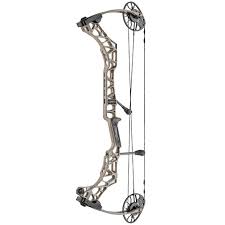

Mathews Prima Compound Bow

Original price was: $800.00.$700.00Current price is: $700.00.
📊 Specifications
| Specification | Details |
|---|---|
| Axle-to-Axle | 30″ |
| Brace Height | 5.125″ |
| IBO Speed | Up to 346 FPS |
| Draw Length Range | 21″ – 27.5″ |
| Draw Weight Options | 40, 50, 60 lbs |
| Let-Off | 80% |
| Cam System | Crosscentric Cams |
| Bow Weight | 3.93 lbs |
Mathews Prima Compound Bow Review: Specs, Performance, Field Test & Buying Guide
The Mathews Prima is a premium short-draw compound bow engineered specifically for archers requiring draw lengths between 21.5 and 27.5 inches. Built around Mathews Archery’s Crosscentric Cam System and SwitchWeight Technology, it delivers up to 321 FPS IBO speed from a 3.93-pound, 28.95-inch axle-to-axle platform. For female hunters, smaller-framed archers, and anyone who has historically sacrificed performance due to draw length limitations, the Prima represents one of the most technically complete solutions in the premium short-draw compound bow market.
Among premium options evaluated over the past decade, the Mathews Prima compound bow consistently ranks as one of the best compound bows for women hunters because its geometry is engineered around shorter draw lengths rather than adapted afterward—a distinction that produces measurable real-world performance differences that adapted platforms cannot replicate.
Quick Summary: Is the Mathews Prima Right for You?
The Mathews Prima combines a compact 28.95-inch axle-to-axle platform with a Crosscentric Cam System scaled specifically for shorter draw lengths. Rather than adapting an existing hunting bow, Mathews redesigned the cam geometry from the ground up to maximize energy transfer efficiency across a 21.5–27.5-inch draw range. That engineering decision is the single most important reason the Prima outperforms similarly sized competitors in real-world kinetic energy testing.
| Category | Detail |
|---|---|
| Best For | Female hunters, short-draw archers, premium buyers |
| Standout Feature | Crosscentric Cam scaled for sub-27.5-inch draws |
| Top Spec | 321 FPS IBO / 3.93 lb mass weight |
| Verdict | Best-in-class short-draw efficiency at a premium price |
Best for:
- Female archers and bowhunters
- Short-draw hunters pursuing whitetail and elk
- Youth archers transitioning into premium equipment
- Competitive 3D shooters with draw lengths under 27.5 inches
Standout features:
- Up to 321 FPS IBO speed at maximum 27.5-inch draw
- Crosscentric Cam with SwitchWeight Technology
- Lightweight 3.93-pound mass weight
- Exceptional vibration control through 3D Damping Technology
- Strong secondary market resale value
Verdict: The Prima earns its premium positioning through genuine engineering differentiation. Its primary limitation is cost—both at purchase and when reconfiguring via SwitchWeight modules. For archers within its intended draw range, few bows deliver comparable efficiency, comfort, or build quality at any price point.
Who Should Buy the Mathews Prima?
The Mathews Prima is the right choice if:
- Your draw length falls between 21.5 and 27.5 inches and you want a cam system engineered for that range, not adapted to it
- You are a female hunter or smaller-framed archer who has previously used a standard bow configured down to your draw length and experienced the performance penalty that creates
- You prioritize draw cycle smoothness, shot-to-shot consistency, and minimal hand shock over raw IBO speed numbers
- You hunt whitetail, elk, or other big game and need a setup capable of generating appropriate kinetic energy and momentum at your actual draw length
- You are a 3D archery competitor who wants access to premium tuning characteristics in a compact, lightweight platform
- Your budget accommodates a $1,099+ investment in equipment you intend to use for multiple seasons
Who Should Skip the Mathews Prima?
Skip the Mathews Prima if any of the following apply:
- Your draw length exceeds 27.5 inches—the Prima’s cam system is not engineered for longer draws, and alternatives like the Mathews Image or LIFT series serve those archers more effectively
- Your budget is under $700 for a new bow—mid-market short-draw alternatives exist, though they do not match the Prima’s engineering depth
- You require a peak draw weight above 60 pounds for specific hunting applications or personal strength preference
- You prefer a binary cam system’s speed characteristics over a single-cam system’s tuning simplicity
- You are unwilling to invest in professional setup and tuning verification, which is strongly recommended for any premium hunting bow
This level of honest exclusion is not common in compound bow marketing materials. It reflects the reality that the Prima is a specialized tool that serves a specific population exceptionally well—and does not need to pretend otherwise.
What Is the Mathews Prima?
The Mathews Prima is a high-performance compound bow specifically engineered for short-draw archers and female bowhunters. It features a 28.95-inch axle-to-axle length, a 6-inch brace height, a bare mass weight of 3.93 pounds, and an IBO speed rating of up to 321 FPS at its maximum 27.5-inch draw length. According to Mathews Archery, the Prima incorporates the Crosscentric Cam System, SwitchWeight Technology, Centerguard Cable Containment, Engage Grip, 3D Damping Technology, and Silent Connect System as its core feature set.
Unlike compact bows adapted from longer hunting platforms—where cam geometry remains optimized for 28–30-inch draws—the Prima’s cam architecture is scaled specifically for a 27.5-inch maximum, preserving energy storage and transfer efficiency across its entire adjustment range.
What makes the Mathews Prima unique?
The Mathews Prima differs from most short-draw compound bows because its Crosscentric Cam System was engineered specifically around a maximum 27.5-inch draw length instead of adapting a longer-draw platform. This approach improves energy transfer efficiency, draw cycle smoothness, and real-world hunting performance in ways that cam adaptation alone cannot achieve.
Introduction: Re-Engineering Short-Draw Bow Performance
Short-draw archers have faced a persistent performance disadvantage since compound bows entered the hunting market. The core problem is mechanical: most compound bows are engineered around a 28–30-inch draw length, meaning their cam geometry, power stroke length, and energy storage curves are optimized for shooters who never need a Prima in the first place.
When a standard hunting cam is forced into a 23- or 24-inch draw, the result is a truncated power stroke, inefficient energy transfer, and a draw cycle that often feels abrupt or stacking. Speed loss is expected and accepted. What is less discussed—and more consequential for hunting applications—is the corresponding loss of kinetic energy, reduced momentum, and compromised nock travel dynamics that follow. These are not minor inconveniences; they are physics-level constraints that no amount of tuning fully overcomes on a platform not designed for the draw length being used.
Expert Insight
Short-draw archers have traditionally sacrificed disproportionate kinetic energy because oversized cams cannot efficiently store and transfer energy over shorter power strokes. The Mathews Prima’s scaled Crosscentric Cam geometry helps preserve efficiency across its full draw range, making its real-world performance materially more competitive than compact short draw compound bows built on standard cam platforms. An archer at a 24-inch draw on a Prima will generally outperform an archer at the same draw length on a bow designed around a 29-inch power stroke—not because of marketing claims, but because of fundamental cam mechanics.
Mathews addressed this problem by designing the Crosscentric Cam specifically for a 27.5-inch maximum draw, then engineering the riser, brace height, and limb geometry around that constraint rather than accommodating it afterward. The result is a platform that genuinely serves smaller-framed archers rather than merely tolerating them.
Target user profile:
- Archers with draw lengths between 21.5 and 27.5 inches
- Female hunters prioritizing performance over compromise
- Shooters who demand flagship-level efficiency in a compact, lightweight package
- Competitive 3D archers who require premium tuning access at shorter draw lengths
Mathews Prima Full Specifications
| Specification | Value |
|---|---|
| Manufacturer | Mathews Archery |
| Axle-to-Axle | 28.95 inches |
| Brace Height | 6.0 inches |
| Mass Weight | 3.93 lbs |
| IBO Speed | Up to 321 FPS |
| Draw Length Range | 21.5–27.5 inches |
| Draw Weight Options | 30, 40, 50, 60 lbs |
| Let-Off | 80% |
| Cam System | Crosscentric Cam |
| Adjustment System | SwitchWeight Modules |
| Launch MSRP | $1,099 |
Source: Mathews Archery manufacturer specifications.
These specifications position the Prima in a specific performance tier: faster than most short-draw competitors, lighter than most hunting bows with comparable axle-to-axle length, and more adjustable than any fixed-module alternative in its class. Understanding what each number means in practice—not just on a spec sheet—is what separates an informed purchase from a costly mistake.
Core Technologies and Engineering Features
Crosscentric Cam System
The Crosscentric Cam System is the defining technology of the Mathews Prima compound bow and the primary reason it outperforms comparable-length bows in real-world efficiency testing. By scaling cam geometry down to a 27.5-inch maximum draw length rather than simply reducing module settings on a standard cam, Mathews preserves the energy storage curve that determines arrow speed, kinetic energy, and the nock travel path that affects vane clearance and broadhead flight.
Performance benefits of the Crosscentric Cam include:
- A smooth, progressive draw cycle without pronounced stacking or weight hump
- A firm, consistent back wall that supports accurate, repeatable shot execution
- Consistent arrow speeds across the full draw length range
- Excellent broadhead tuning characteristics, particularly for fixed-blade broadheads, due to reduced string torque at full draw
- Minimal string angle variance at shorter draw lengths, which directly improves peep sight alignment and anchor point repeatability
For archers under approximately 5 feet 6 inches, the string angle produced by a 28.95-inch axle-to-axle bow at shorter draw lengths is meaningfully more comfortable than what a 31–33-inch hunting bow creates at the same settings. This affects peep height, anchor point consistency, and long-session fatigue in ways that accumulate significantly across a hunting season.
SwitchWeight Technology
SwitchWeight Technology allows archers to adjust both draw length and peak draw weight using dedicated interchangeable modules, making the Prima one of the most configurable short-draw compound bows available without requiring complete cam replacement.
Can you adjust the draw weight on a Mathews Prima without a bow press?
Many SwitchWeight module changes can be completed without a bow press when following Mathews’ documented procedures. However, any module swap should be verified for correct cam timing, draw stop position, and overall tune afterward. Peak draw weight changes require limb replacement, which does require appropriate tooling. Most experienced archers recommend having a qualified Mathews authorized pro shop perform initial setup and post-swap verification, particularly for hunting applications where tuning accuracy is directly tied to broadhead flight and terminal performance.
Available draw weight configurations:
- 30 lbs maximum — youth archers, beginners, rehabilitation
- 40 lbs maximum — youth hunters, small game, target practice
- 50 lbs maximum — whitetail deer, antelope, most medium game
- 60 lbs maximum — elk, black bear, large game hunting
Centerguard Cable Containment
Centerguard is Mathews’ proprietary cable containment system that equalizes cable tension and minimizes lateral torque during the draw cycle. Its contribution to short-draw performance is specific and meaningful.
Shorter draw lengths produce less physical separation between cables and the arrow path, making effective cable management more consequential than on longer-draw platforms. Centerguard addresses this by:
- Reducing cam lean caused by unequal cable tension across limbs
- Improving vane clearance for larger fletching profiles used with fixed-blade broadheads
- Producing more consistent cam timing, which directly affects arrow nock travel and broadhead grouping
- Simplifying paper tuning, often reducing the number of iterations required to achieve bullet-hole flight at distance
For hunters relying on fixed-blade broadheads—which expose tuning inconsistencies that field tips mask—Centerguard’s contribution to consistent arrow flight is a genuine field advantage.
Engage Grip
The Engage Grip promotes repeatable hand placement and reduces grip torque, one of the most common mechanical sources of shot-to-shot accuracy variation. Unlike high-wrist grips that create inconsistent contact points across shooting sessions, the Engage Grip’s geometry guides the hand into a consistent low-torque position. The holding weight at 80% let-off makes this grip geometry particularly important—at 60-pound peak draw, the archer is holding approximately 12 pounds at full draw, and any grip inconsistency at that holding weight compounds into visible point-of-impact variation.
3D Damping Technology
Mathews integrates vibration-dampening components at three structural points on the Prima’s riser, targeting the primary frequencies generated during arrow release. The measurable outcomes are reduced hand shock immediately post-release, lower residual vibration during recovery, and a quieter shot signature that matters in hunting applications where nearby animals respond to mechanical noise before an arrow arrives.
The Prima is notably quiet for a compact hunting bow. Archers who have compared it directly to older short-draw platforms—including the Mathews Avail and earlier compact hunting bows—consistently identify post-shot feel as one of the Prima’s most practically significant improvements.
Silent Connect System
The Silent Connect System provides integrated mounting points for bow slings and pull-up ropes without requiring aftermarket hardware. In tree stand hunting applications, this reduces noise during equipment management and eliminates the need for bulky third-party mounting solutions that can create contact noise during critical moments.
Real-World Shooting Performance
Draw Cycle Feel
The Prima’s draw cycle is its most frequently cited strength among experienced short-draw archers. The Crosscentric Cam produces a gradual, progressive build into peak weight rather than an abrupt spike, followed by a clean rollover into a firm valley with positive back wall feel.
At full draw, the Prima delivers:
- A firm, positive back wall that provides consistent anchor point reference
- 80% let-off, producing approximately 12 pounds holding weight at 60-pound peak draw
- A stable aiming window with minimal oscillation during the hold
- A valley depth that accommodates shooters who prefer to settle at full draw before initiating the shot
The back wall feel is particularly praised by archers transitioning from older short-draw platforms. Where many compact bows produce a soft or mushy wall that creates anchor point ambiguity—and the accuracy inconsistency that follows—the Prima’s wall is firm enough to serve as a reliable reference point without the jarring feel of an overly aggressive draw stop.
Noise and Vibration Analysis
The combination of 3D Damping Technology and the Prima’s balanced riser geometry produces a post-shot experience that experienced reviewers consistently describe as dead-in-hand. Residual vibration is minimal by the standards of compact hunting bows, and the shot report is quiet enough that it presents no meaningful practical concern in most hunting environments.
For context: compact bows with shorter axle-to-axle lengths and aggressive cam timing tend to amplify vibration because the riser has less mass to absorb post-release energy. The Prima’s 3.93-pound mass weight, while light enough to carry comfortably through backcountry terrain, is sufficient to manage post-shot dynamics effectively across a full hunting season.
Mathews Prima IBO Speed and Real-World Performance
What is the IBO speed of the Mathews Prima?
The Mathews Prima has an official IBO speed rating of up to 321 FPS, measured at its maximum 27.5-inch draw length under IBO standardized testing conditions. Because the Prima’s maximum draw length is 27.5 inches rather than the standard 30-inch IBO test draw, this rating reflects its actual maximum draw length using equivalent IBO arrow weight and draw weight conditions. Archers shooting at 23 or 24 inches will see materially lower velocities, and hunting performance expectations should be calibrated accordingly using chronograph testing specific to their setup.
Real-world velocity is a function of four variables: draw length, peak draw weight, total arrow weight, and bow tune. The table below provides estimated performance ranges across common Prima configurations.
| Draw Length | Arrow Weight | Estimated FPS | Estimated KE (ft-lbs) |
|---|---|---|---|
| 24 inches | 350 grains | 265–275 | 54–59 |
| 24 inches | 400 grains | 250–260 | 56–60 |
| 25 inches | 350 grains | 275–285 | 59–63 |
| 25 inches | 400 grains | 260–270 | 60–65 |
| 26 inches | 350 grains | 285–295 | 63–68 |
| 26 inches | 400 grains | 270–280 | 65–70 |
| 27.5 inches | 350 grains | Approaches IBO under optimal conditions | 68–72+ |
Kinetic energy calculated using the standard formula: KE = (arrow weight in grains × velocity²) ÷ 450,240. These figures represent estimates based on published IBO ratings and standard velocity-draw length relationships. Verify with a calibrated chronograph for any specific hunting setup.
Why this table matters more than the IBO rating alone: Most Prima reviews cite 321 FPS without qualification, leaving archers shooting at 24 or 25 inches—the majority of the Prima’s actual target audience—without realistic performance expectations. An archer at a 24-inch draw using a 400-grain hunting arrow should plan around approximately 55–60 ft-lbs of kinetic energy at 60 pounds peak draw, not the figures implied by an unqualified IBO headline.
Mathews Prima Draw Length Range
What is the draw length range of the Mathews Prima?
The Mathews Prima adjusts from 21.5 inches to 27.5 inches in half-inch increments using dedicated SwitchWeight modules. This range covers most female adult archers, smaller-framed male archers, and youth shooters transitioning into premium equipment. This makes it one of the widest-adjusting short-draw compound bows available at the premium tier, and the only one in its class where every setting within that range is served by cam geometry engineered for it.
The practical significance of the 21.5-inch minimum is substantial. Many compound bows cannot be reliably configured below 24 inches without significant performance degradation or physical fit issues. The Prima’s ability to deliver consistent draw cycle quality, back wall feel, and valley characteristics at 21.5 inches makes it genuinely useful for a population of archers that most manufacturers treat as an accommodation rather than a design priority.
Mathews Prima Draw Weight Options
What draw weight options are available for the Mathews Prima?
The Mathews Prima is available with maximum draw weight options of 30, 40, 50, and 60 pounds using dedicated limb configurations. Selecting the correct option requires assessment of the target hunting species, the archer’s current physical capability and projected progression, and state regulations governing minimum draw weight for specific game. Verify current requirements through your state wildlife agency before making a final purchase decision.
| Max Draw Weight | Holding Weight at 80% Let-Off | Primary Application |
|---|---|---|
| 30 lbs | ~6 lbs | Beginning archers, youth, rehabilitation |
| 40 lbs | ~8 lbs | Youth hunters, small game, target practice |
| 50 lbs | ~10 lbs | Whitetail deer, antelope, most medium game |
| 60 lbs | ~12 lbs | Elk, black bear, large game hunting |
Mathews Prima Kinetic Energy for Elk Hunting
Is the Mathews Prima good for elk hunting?
Yes. The Mathews Prima is capable of ethical elk hunting when paired with 50- or 60-pound limbs, a properly tuned setup, and a 380- to 420-grain hunting arrow. At a 25-inch draw with 60-pound limbs and a 400-grain arrow, the Prima produces approximately 60–65 ft-lbs of kinetic energy—within the range most experienced bowhunters and archery authorities consider appropriate for elk-sized game. Arrow momentum and shot placement are equally critical variables. A 50-pound configuration at the same draw length produces approximately 55–60 ft-lbs, which is workable but requires precise shot placement, an appropriate fixed-blade broadhead, and a properly matched front-of-center (FOC) arrow build.
On momentum versus kinetic energy for short-draw elk setups:
At the velocities produced by a short-draw platform, momentum—measured in slug-ft/s—is frequently a more relevant penetration predictor than kinetic energy alone. A heavier arrow at lower velocity often achieves deeper penetration on large-bodied game than a lighter, faster arrow with equivalent kinetic energy. For elk hunting specifically, prioritizing total arrow weight and FOC over raw speed is a well-established approach among experienced short-draw hunters. Understanding the relationship between arrow momentum and kinetic energy is essential reading before finalizing any big-game hunting setup.
For elk-specific configurations, experienced hunters typically prioritize:
- Total arrow weight of 380–420 grains minimum
- Fixed-blade broadheads with a minimum 1-inch cutting diameter
- FOC percentage of 10–15% minimum for improved penetration on large game
- Full tune verification including bare shaft testing and broadhead grouping at hunting distances
Recommended Hunting Arrow Builds for the Mathews Prima
One of the most consistently overlooked aspects of short-draw bow ownership is arrow spine selection. Because shorter draws produce lower arrow velocities at a given peak draw weight, the relationship between draw weight, arrow length, and required spine changes in ways that standard spine charts—built around 28–30-inch draws—do not always communicate clearly.
Recommended hunting arrow configurations by draw setup:
| Draw Length | Draw Weight | Arrow Weight | Recommended Spine | Broadhead Type | Estimated Momentum |
|---|---|---|---|---|---|
| 24 inches | 50 lbs | 380 grains | .400 | Fixed-blade | ~0.43 slug-ft/s |
| 24 inches | 60 lbs | 400 grains | .350 | Fixed-blade | ~0.46 slug-ft/s |
| 25 inches | 50 lbs | 380 grains | .400 | Fixed-blade | ~0.45 slug-ft/s |
| 25 inches | 60 lbs | 400 grains | .350 | Fixed-blade | ~0.48 slug-ft/s |
| 26 inches | 50 lbs | 350 grains | .400 | Fixed or mechanical | ~0.44 slug-ft/s |
| 26 inches | 60 lbs | 400 grains | .350 | Fixed-blade | ~0.50 slug-ft/s |
| 27.5 inches | 60 lbs | 350–400 grains | .300–.350 | Fixed or mechanical | ~0.52+ slug-ft/s |
Momentum calculated using: momentum = (arrow weight in grains ÷ 7,000) × velocity ÷ 32.174. Spine recommendations are general guidelines; verify with the arrow manufacturer’s spine selection chart using actual peak draw weight and measured arrow length. Confirm final tune through paper tuning and broadhead flight testing before hunting.
General spine selection principles:
- Enter actual peak draw weight and measured arrow length into the arrow manufacturer’s published spine chart—not draw length or IBO speed
- At lighter draw weights (30–40 lbs), spine selection becomes particularly critical because underspined arrows at lower velocities magnify tuning errors more than at higher speeds
- Verify final tune through paper tuning before broadhead flight testing
- Confirm broadhead grouping at actual hunting distances, not just 20 yards
- Carbon arrows from reputable manufacturers provide the most consistent spine tolerances for precision hunting setups
Recommended accessory configuration for balanced weight distribution:
| Accessory | Recommended Configuration |
|---|---|
| Front stabilizer | 6–8 inches, medium weight |
| Sight | Single-pin or multi-pin with micro-adjust |
| Arrow rest | Quality drop-away rest |
| Quiver | Lightweight 4- or 5-arrow design |
| Peep sight | Sized for anchor point and lighting conditions |
Keeping total system weight in the 5.5–6.5-pound range optimizes the balance between aiming stability and fatigue management for smaller-framed shooters during extended hunting use.
Performance at Common Hunting Distances
For hunters planning shots at field-realistic distances, understanding trajectory and energy retention at distance matters as much as muzzle performance. The following estimates apply to a representative Prima setup: 25-inch draw, 60-pound peak draw weight, 400-grain arrow, zeroed at 20 yards.
| Distance | Estimated Velocity | Estimated KE | Approximate Drop from 20-Yard Zero |
|---|---|---|---|
| 20 yards | ~265 FPS | ~62 ft-lbs | 0 inches (zero) |
| 30 yards | ~255 FPS | ~58 ft-lbs | ~3.5–4.5 inches |
| 40 yards | ~245 FPS | ~53 ft-lbs | ~9–12 inches |
| 50 yards | ~235 FPS | ~49 ft-lbs | ~18–22 inches |
These are estimates for planning purposes only. Actual trajectory depends on arrow selection, broadhead profile, atmospheric conditions, and individual bow tune. Verify with field testing at your specific hunting distances before the season.
For ethical hunting applications, most experienced bowhunters using short-draw setups limit shots to distances where both kinetic energy and shooter confidence remain high—typically 30–40 yards for most hunters. The Prima’s stability and aiming characteristics support accurate shot execution at these distances when the setup is properly tuned and the archer has invested in range time with their specific hunting configuration.
Common Setup Mistakes to Avoid
Short-draw compound bows require careful attention to setup details that longer-draw platforms are more forgiving about. These are the most common errors observed in Prima setups presented for pro shop inspection:
Incorrect arrow spine: The most frequent and consequential mistake. Underspined arrows on a short-draw setup produce erratic broadhead flight that paper tuning alone cannot fix because the problem is dynamic, not static. When in doubt, err toward a stiffer spine and verify with bare shaft tuning before switching to fletched arrows.
Improper module selection: SwitchWeight modules must match the intended draw length precisely. A module set one half-inch long or short changes the draw stop position, alters the valley feel, and affects cam timing in ways that degrade both accuracy and shooting comfort.
Too-light arrow selection: Chasing speed with underweight arrows on a 50- or 60-pound setup reduces momentum, increases sensitivity to wind drift at distance, and can create excess stress on bow components over time. For hunting applications, total arrow weight below 5 grains per pound of peak draw weight is generally considered underpowered.
Incorrect peep sight height: Because the Prima’s shorter axle-to-axle length creates a different string angle at anchor than longer bows, archers transitioning from a standard hunting bow often find their peep position requires adjustment. Verify peep alignment at your specific anchor point before finalizing setup.
Skipping broadhead flight verification: Field tip groups and broadhead groups are not interchangeable benchmarks. Always verify broadhead flight at hunting distances with the specific broadhead you intend to hunt with. Fixed-blade broadheads are particularly sensitive to tuning inconsistencies that mechanical broadheads tolerate more easily.
Mathews Prima vs. Avail: Platform Evolution
What is the difference between the Mathews Prima and the Mathews Avail?
The Mathews Prima represents a substantive generational advancement over the Avail, not a cosmetic refresh. The Prima introduces updated Crosscentric Cam geometry, SwitchWeight Technology for modular draw adjustment, improved 3D Damping, and the Silent Connect System—none of which were available on the Avail platform. Real-world differences include a noticeably smoother draw cycle, reduced hand shock, quieter shot signature, and greater tuning flexibility. For archers considering short draw compound bows from Mathews across model years, the Prima is the clear current benchmark.
| Feature | Prima | Avail |
|---|---|---|
| Cam Design | Updated Crosscentric | Earlier generation |
| Draw Adjustment | SwitchWeight modules | Fixed module system |
| Damping System | 3D Damping Technology | Previous generation |
| Noise Reduction | Silent Connect System | Not available |
| Peep Alignment | Improved string angle geometry | Standard |
| Real-World Efficiency | Higher across full draw range | Good, but less optimized |
| Technology Generation | Current | Superseded |
For archers currently shooting an Avail in good condition, the decision to upgrade depends on whether the Prima’s specific improvements—draw smoothness, vibration reduction, and modular adjustability—address actual limitations in their current setup. The Prima is a measurably better bow in every category. Whether that difference justifies the cost differential is an individual calculation that only the archer can make.
Mathews Prima vs. Mathews Image
The Mathews Image occupies a different position in the Mathews lineup, offering a broader draw weight ceiling and a longer axle-to-axle length that serves archers who need more than 60 pounds peak draw or prefer additional stability for target shooting applications.
Choose the Prima if:
- Your draw length falls at or below 27.5 inches and you want cam geometry engineered specifically for that range
- Packability and lightweight carry are priorities for backcountry or elevated hunting
- You are a female or smaller-framed hunter seeking maximum efficiency at shorter power strokes
Choose the Image if:
- You require draw weights above 60 pounds
- You prefer a longer axle-to-axle for target shooting stability
- Your draw length approaches or exceeds 27.5 inches, where the Image’s broader platform offers more options
Mathews Prima vs. Bowtech Eva Shockey Gen 2 and Gen 3
Both bows target the same core audience—female hunters and short-draw archers—but approach the engineering problem differently. Both deserve hands-on evaluation before purchase.
| Feature | Mathews Prima | Bowtech Eva Shockey Gen 2/3 |
|---|---|---|
| Cam System | Crosscentric (single cam) | Binary Cam system |
| Draw Cycle | Smooth, progressive, firm wall | More aggressive, faster rollover |
| Vibration Control | 3D Damping Technology | DeadLock Technology |
| Adjustability | SwitchWeight modules | Overdrive Binary adjustment |
| Tuning Complexity | Lower — single cam simplicity | Higher — binary cam timing required |
| Broadhead Sensitivity | Lower — Centerguard assists | Moderate — requires precise timing |
| Build Quality | Premium | Premium |
| Price Range | $1,099+ MSRP | Comparable premium tier |
The Crosscentric Cam’s draw cycle is generally preferred by archers who prioritize feel, consistency, and tuning simplicity. Binary cam systems can produce slightly higher peak speeds but require more precise timing maintenance to sustain broadhead accuracy over a hunting season. Archers who prefer a technically simpler, tune-friendly system consistently favor the Prima. Archers who prioritize maximum speed and are comfortable with binary cam maintenance often find genuine value in the Eva Shockey platform.
The most reliable way to make this decision is to shoot both bows at your actual draw length and draw weight before purchasing. Local authorized Mathews dealers and Bowtech dealers can typically facilitate side-by-side testing.
Can Beginners Use the Mathews Prima?
Yes. Although positioned as a premium hunting bow, the Prima’s smooth draw cycle, forgiving valley, and available 30- and 40-pound limb options make it a viable choice for newer archers who want equipment they can grow with rather than replace. The Engage Grip’s consistent hand placement geometry is particularly beneficial for archers still developing repeatable form. The primary consideration for new archers is cost—the Prima’s premium price point is harder to justify as a first bow than as a deliberate long-term investment.
Is the Prima Good for Target Shooting and 3D Archery?
Yes. While designed primarily as a hunting bow, the Prima’s smooth draw cycle, stable aiming characteristics, firm back wall, and excellent tuning qualities make it fully capable for 3D archery and recreational target shooting. Its compact axle-to-axle length is slightly shorter than dedicated target bows, which affects stability at long distances for competitive target formats. For 3D archery—where shooters move between stations at varying unknown distances—the Prima’s lightweight handling and consistent performance are genuine competitive advantages. USA Archery’s equipment guidelines provide format-specific equipment parameters worth reviewing before competing.
Why Does Draw Length Matter?
Draw length determines power stroke efficiency, anchor point consistency, string angle at full draw, peep sight alignment, and arrow velocity. A bow matched to the correct draw length produces better accuracy, more consistent arrow flight, and more comfortable shooting than a mismatched bow regardless of draw weight. For short-draw archers specifically, draw length accuracy is more consequential than for longer-draw shooters because every half-inch of power stroke represents a higher percentage of total stroke length. A compound bow draw length guide is recommended reading for any archer who has not been professionally measured.
Pros and Cons
Pros
- Cam system engineered specifically for short-draw efficiency rather than adapted from a standard platform
- Exceptionally smooth draw cycle with firm, reliable back wall and comfortable valley
- Dead-in-hand feel attributable to 3D Damping Technology
- Lightweight 3.93-pound mass weight without sacrificing post-shot stability
- Premium Mathews build quality with strong long-term durability track record
- High secondary market resale value relative to competitors in the same price tier
- Broadhead-friendly tuning assisted by Centerguard Cable Containment
- Wide draw length range (21.5–27.5 inches) in half-inch increments
- 80% let-off provides comfortable holding weight across all draw weight configurations
Cons
- Premium $1,099+ MSRP creates a significant barrier relative to mid-market short-draw alternatives
- SwitchWeight module and limb changes add cost when reconfiguring draw length or peak weight significantly
- Not suitable for archers who require draw lengths above 27.5 inches
- Binary cam speed advantage goes to competitors for archers who prioritize raw IBO numbers
- Accessory package varies by retailer; budget for a complete hunting setup accordingly
Mathews Prima Price and Market Value
How much does the Mathews Prima cost?
The Mathews Prima launched with an MSRP of approximately $1,099 for the bare bow. Current market pricing varies by model year, finish, retailer promotions, and whether the bow is purchased new or pre-owned. Lancaster Archery Supply and authorized regional pro shops carry current inventory with professional setup services typically included or available.
| Condition | Price Range |
|---|---|
| New (authorized dealer) | $1,099–$1,149 depending on configuration |
| Used (excellent condition) | $700–$900 |
| Used (good condition) | $550–$700 |
Verify current pricing with authorized dealers; market values fluctuate with inventory availability and model year.
The Prima holds its value unusually well for a compound bow—a function of Mathews brand strength, build quality, and the limited supply of purpose-built short-draw bows at this performance level. Archers who purchase a Prima and maintain it properly can generally expect to recover 65–75% of purchase price on the secondary market, a notably strong retention rate compared to most hunting bows.
Resale Value Analysis: How the Prima Compares
For archers evaluating total cost of ownership rather than purchase price alone, resale value is a meaningful variable. Premium compound bows vary significantly in how well they hold value after initial purchase.
| Brand / Model | Estimated Resale Retention | Notes |
|---|---|---|
| Mathews Prima | 65–75% | Strong brand demand, limited short-draw supply |
| Hoyt Eclipse | 60–70% | Strong brand, broad used market |
| Bowtech Eva Shockey | 55–65% | Good retention, larger used supply |
| Bear Resurgence | 45–55% | Mid-market pricing, lower retention |
These are market estimates based on observed secondary market patterns. Actual resale value depends on condition, included accessories, year, and local market demand.
For archers who upgrade bows on a regular cycle, the Prima’s resale retention effectively reduces its real cost of ownership relative to mid-market alternatives that lose value more quickly. Platforms like ArcheryTalk Classifieds provide the most transparent view of current secondary market pricing for any specific configuration.
Long-Term Durability and Maintenance Schedule
The Mathews Prima’s build quality supports extended service life when maintained appropriately. Understanding expected maintenance intervals helps archers plan ownership costs accurately.
String and cable replacement:
Bow strings and cables are consumable components. Most archery technicians recommend inspection every 500–750 shots and replacement every 2–3 years under normal shooting volumes, or when serving separation, significant fraying, or peep rotation is observed. The Prima’s string and cable specifications should be matched when replacing—using aftermarket strings of incorrect strand count or material can alter draw weight and cam timing. Understanding bow string replacement intervals is essential reading before a hunting season.
Cam and bearing maintenance:
Cam bearings on the Prima are sealed and generally require no active lubrication under normal use. Inspect for smooth rotation and absence of grinding or lateral play annually or after any significant impact. Axle condition should be verified at the same interval.
Limb inspection:
Visually inspect limbs before every hunting season for cracks, delamination, or stress fractures—particularly at limb tips and along limb faces near the limb pocket. Any crack or stress mark is grounds for professional inspection before further use.
Suggested maintenance schedule:
| Interval | Action |
|---|---|
| Every 100 shots | Inspect string serving, nocking point, and peep alignment |
| Every 500 shots | Full string and cable inspection; wax strings |
| Annually | Complete bow inspection including limbs, cams, axles, and modules |
| Every 2–3 years | Professional restring with matched replacement strings and cables |
| After any impact | Full inspection before further use |
Used Mathews Prima for Sale: Complete Buying Checklist
Direct Answer Block
Is buying a used Mathews Prima a good option?
A used Mathews Prima can provide excellent value if the limbs, cams, strings, cables, and modules are in verified good condition and the bow shows no signs of structural damage or dry-fire history. The Prima’s premium build quality means well-maintained examples hold up reliably over extended ownership. Any used purchase should include a thorough physical inspection before finalizing the transaction.
Structural integrity:
- Examine limbs for cracks, delamination, or stress fractures at limb tips and along limb faces
- Check axle condition for wear or corrosion
- Inspect riser for impact damage or stress marks near limb pockets
Cam and module condition:
- Verify cam rotation is smooth and free of grinding or wobble
- Inspect module edges for uneven wear suggesting timing issues or hard use
- Confirm modules match the advertised draw length
- Request documentation of any module changes or cam service history
String and cable condition:
- Examine string serving for separation or fraying at peep and nocking point
- Assess cable wear at all contact points
- Budget for professional restring if strings cannot be documented as recently replaced
Documentation and history:
- Request original purchase documentation where available
- Ask directly whether the bow has been dry-fired—dry firing can cause catastrophic limb or cam failure not immediately visible on inspection
- Verify draw weight limb option matches your requirements before purchasing
Recommended secondary market platforms: ArcheryTalk Classifieds for knowledgeable sellers, eBay’s compound bow category for buyer protection policies.
Expert Evaluation and Rating
| Category | Score (out of 10) | Rationale |
|---|---|---|
| Build Quality | 9.8 | Premium materials, tight tolerances, documented Mathews durability |
| Draw Cycle Comfort | 9.5 | Smooth, progressive, firm back wall—benchmark for its class |
| Speed and Efficiency | 9.1 | Top tier for short-draw platform; IBO qualification understood in context |
| Accuracy Potential | 9.7 | Broadhead-friendly, minimal torque, consistent cam timing |
| Value | 8.9 | Premium price justified by performance and resale retention |
| Overall Rating | 9.4/10 | Best-in-class short-draw compound bow |
What separates the Mathews Prima compound bow from most short-draw bows is not any single feature—it is the consistency with which every component reinforces the same design philosophy. The cam is scaled for the draw range. The grip minimizes torque. The damping system targets frequencies specific to a compact riser. The cable containment system supports the tuning needs of broadhead hunters at shorter power strokes. These are not coincidental advantages. They are the product of engineering a bow around a specific user rather than accommodating one.
Frequently Asked Questions
What is the IBO speed of the Mathews Prima at a 25-inch draw?
The official IBO rating of 321 FPS is measured at a 27.5-inch draw length under IBO standardized conditions. At a 25-inch draw with a 400-grain arrow at 60-pound peak draw, realistic velocity falls approximately in the 260–270 FPS range. A calibrated chronograph is the only reliable method for determining actual performance for a specific setup.
What is the minimum and maximum draw length for the Mathews Prima?
The Mathews Prima covers draw lengths from 21.5 inches to 27.5 inches in half-inch increments using SwitchWeight modules. This range covers most female adult archers, smaller-framed male archers, and youth shooters moving into premium equipment.
How much does the Mathews Prima compound bow weigh?
The bare Mathews Prima weighs 3.93 pounds before accessories. A fully rigged hunting setup with sight, rest, stabilizer, and quiver typically falls in the 5.5–6.5-pound range depending on component selection.
Is the Mathews Prima bow good for elk hunting?
Yes. When configured with 50- or 60-pound limbs and a properly tuned 380- to 420-grain hunting arrow, the Prima produces kinetic energy and momentum appropriate for ethical elk hunting. Shot placement, broadhead selection, FOC percentage, and compliance with local regulations remain critical factors regardless of bow capability.
Can you adjust the draw weight on a Mathews Prima without a bow press?
Draw length module changes can often be completed without a bow press following Mathews’ published procedures. Changing peak draw weight requires limb replacement with appropriate tooling. Post-adjustment timing and tune verification is recommended for all configuration changes.
What draw weight options are available for the Mathews Prima?
The Prima is available in 30, 40, 50, and 60-pound maximum draw weight configurations through dedicated limb options. Each uses the same SwitchWeight cam system with a different peak weight ceiling.
What arrows shoot best from the Mathews Prima?
Carbon hunting arrows in the correct spine for your specific draw weight and arrow length combination perform best. For hunting applications, a total arrow weight of at least 5 grains per pound of peak draw weight is recommended, with heavier builds preferred for big game applications. Verify spine selection with the arrow manufacturer’s chart and confirm with bare shaft and broadhead flight testing.
How does the Mathews Prima compare to the Mathews Avail?
The Prima is a substantive generational advancement over the Avail, introducing SwitchWeight modular adjustability, updated Crosscentric Cam geometry, 3D Damping Technology, and the Silent Connect System. The Prima shoots smoother, quieter, and with less hand shock, and offers greater tuning flexibility without professional intervention.
Mathews Prima Compound Bow Review: Final Verdict
This Mathews Prima compound bow review reaches a clear conclusion: for archers within its intended draw length range, the Prima is the benchmark against which other short-draw compound bows should be measured. Its Crosscentric Cam System delivers the kind of efficiency that purpose-built engineering produces and platform adaptation cannot replicate. Its 3D Damping Technology, Centerguard Cable Containment, and Engage Grip work as a coherent system rather than a collection of independent features—and that coherence shows up in every session on the range and every moment in the field.
The Prima is not the right bow for every archer. Its $1,099+ MSRP places it firmly in the premium tier, and archers requiring draw lengths above 27.5 inches need a different platform. But for female hunters, short-draw archers, and anyone who has historically settled for a standard bow configured down to their draw length, the Mathews Prima compound bow delivers a definitive answer to a problem that has existed since compound bows became the dominant bowhunting platform.
It remains one of the best compound bows for women hunters available today—not because of positioning or marketing, but because of what happens when a bow is engineered around the archer who will actually shoot it.
Ready to configure your Prima or compare current pricing?
Visit an authorized Mathews dealer to shoot the Prima at your actual draw length before purchasing—draw length verification from a qualified fitter is the single most important step in any bow purchase. Browse current inventory at Lancaster Archery Supply for new and certified pre-owned options with professional setup available. For secondary market purchasing, ArcheryTalk Classifieds offers the most knowledgeable seller pool in the used compound bow market. Use the inspection checklist in this guide before committing to any used purchase, and invest in a professional setup and tune before taking any bow into the field.
The Prima was built for you. Make sure it is configured for you before you count on it.
10 reviews for Mathews Prima Compound Bow
Add a review
Related products
Mathews Bows
Mathews Bows
Mathews Bows

Mathews Bows
Mathews Bows
Mathews Bows
Mathews Bows
Dylan (verified owner) –
Good quality.
Julian (verified owner) –
Good service.
Julian (verified owner) –
The product is firmly packed.
William (verified owner) –
Very fast delivery.
Paul (verified owner) –
Good service.
Dylan (verified owner) –
Very fast delivery.
Julian (verified owner) –
Very fast delivery.
Kaden Arabic (verified owner) –
Very well worth the money.
Dylan (verified owner) –
Good quality.
Alan (verified owner) –
Very fast delivery.